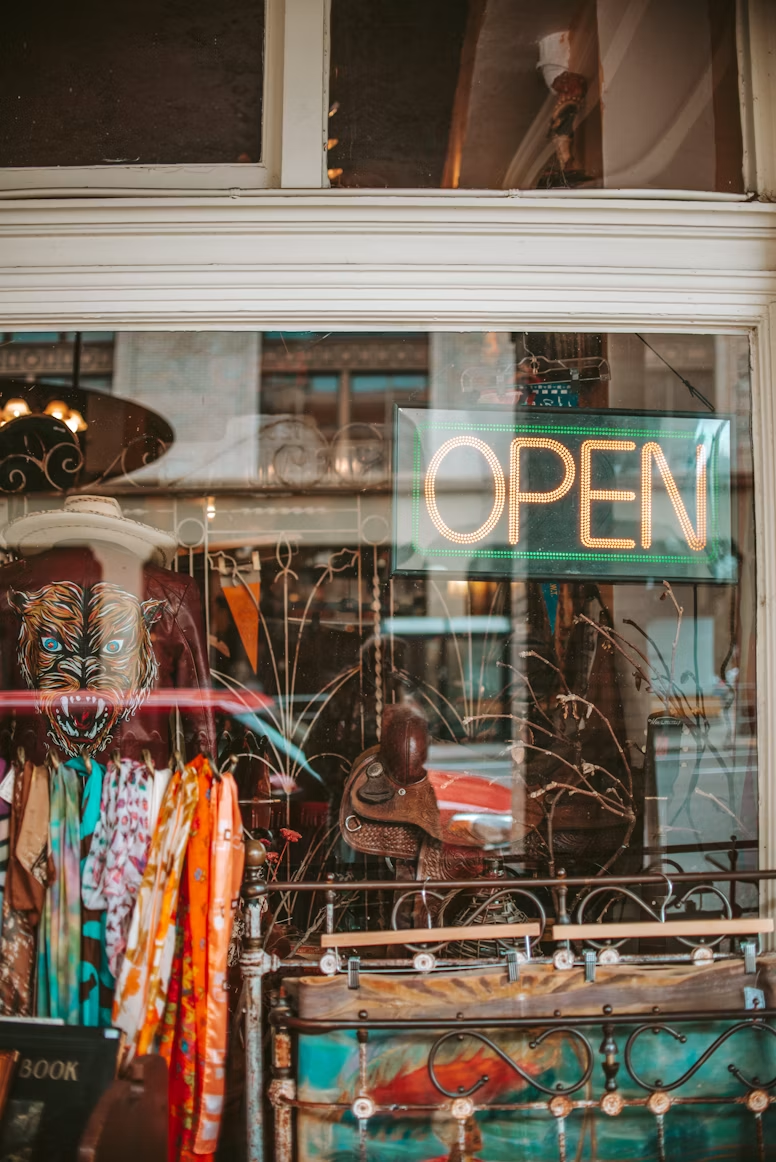
I did not realize charity outlets had gone upscale until the first time I dropped off bags of stuff at the shop in my new home town. Moving resulted in cleaning out closets, drawers, entire rooms. It took a while before my closet needed another clear-out.
One rainy day I sorted through my clothes, the result three garbage bags full of discarded items. I don’t understand how I accumulated so many unneeded and unwanted things in such a short time, but that is a musing for another time.
I dragged my bags, filled with articles I assumed useful to another person, into my local thrift store. I sat across the counter from the salesgirl with the idea that I would drop off the bags and leave.
Not so fast…
Nowadays – according to the smiling volunteer across the counter from me – no one wants clothes that are torn, stained, too dated, or discolored, nor are folks eager to buy chipped, broken, and/or unworkable goods. Every potential donation must be carefully scrutinized.
Items in less than almost-pristine condition, the woman informed me, do not sell quickly, if at all. The charity makes money with high-quality items. And the word gets around. Folks tell others about a place selling merchandise that looks almost-new. Traffic rises, sales increase, and the charity makes money.
In my old hometown I would haul a couple of bags into the store, and a helpful volunteer would take them off my hands, ready to sift through my discards. Old clothes not suitable for anyone’s body were purchased and reworked for quilt material, nursery school craft projects, costume boxes, and other reusables. Maybe people are not as creative nowadays. Maybe they don’t have as much time for do-it-yourself projects. Maybe the staff does not have the time and patience to sift through the merchandise and price and market accordingly.
The woman behind the counter stated, “We have to go through the bags. Anything we don’t want you have to take back.” So I unpack the bags, one item at a time, and the woman carefully examines each garment. She reached a decision and flung each piece on one of two piles: the accepted stack, or the reject pile.
A lot of items were pitched onto the reject pile. I was surprised some previously adored sweater or shirt was unceremoniously tossed aside. Sometimes the item shrank, or my body parts shifted, or I gained a few pounds, but it was, I thought, still in good shape…
The embarrassing thing about this experience under the thumb of one smiling volunteer, undeterred by my whining or comments or rolled eyes, was that a day or two before I walked into the shop, these same items were in my house. Used. Worn. Treasured. Loved.
I learned my lesson. Now few things are rejected – sometimes none. I toss items I assume will be vetoed into the garbage, eliminating the middleman, or in a bag for Goodwill. Goodwill accepts bags unopened. Whatever they do with the items, I don’t care. They are out of my house.
I am well acquainted with thrift shops and consignment stores. When I worked at a women’s center years ago (during the last century, but that sounds so…ancient) we helped people re-enter the work force. A fun and educational activity each session was a ‘field trip’. We shopped at a consignment store for interview outfits and staged a fashion show.
I sometimes stroll through neighborhoods on my travels and cannot resist stepping into a thrift or consignment store. I frequently purchase something; most often an article of clothing. My husband and I were out of town years ago and packed an unsuitable wardrobe – spring clothes when a cold streak blasted through town. Within walking distance of our motel was a Goodwill. We purchased sweaters to keep us warm. I have bought toys and games for the grandkids at thrift shops.
I am being environmentally friendly and green by recycling possessions I no longer need, or no longer fit, or simply do not like anymore (what was I thinking when I bought that?). I also purchase and reuse pre-owned items…thrift shops and consignment stores rock!
Leave a Reply